

Best Vitamin D3 Supplement: Liquid Liposomal Formula With K2 Gains Attention as Deficiency Awareness Surges
Purality Health's 5000 IU Micelle Formula Draws Consumer Interest as Winter Deficiency Research and Absorption Technology Discussions Converge in January 2026
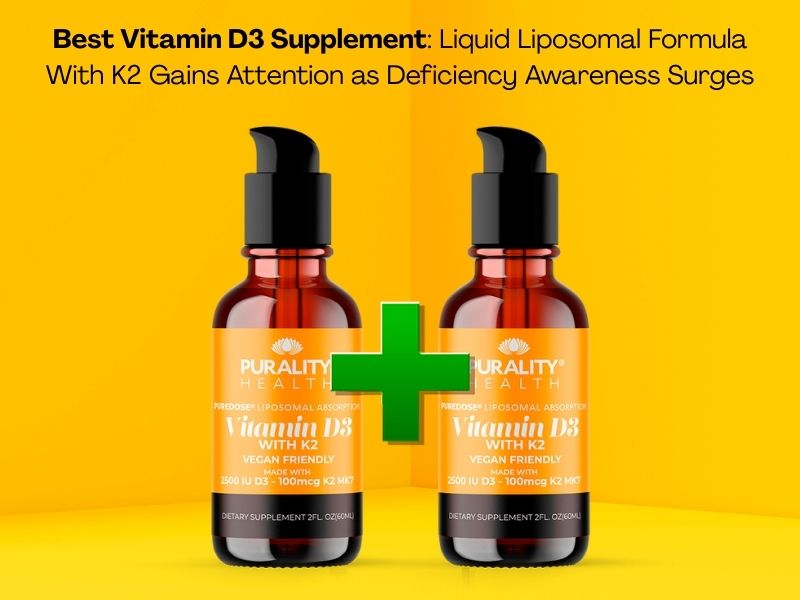
Aurora, CO, Jan. 05, 2026 (GLOBE NEWSWIRE) -- As Americans research vitamin D supplementation options during peak winter deficiency season, consumer attention has turned to delivery technology and formulation factors that may influence nutrient absorption. Purality Health's Micelle Liposomal Vitamin D3+K2 is one formulation currently being examined by consumers as part of broader discussions around vitamin D dosing adequacy and nutrient delivery methods.
Affiliate Disclosure: This article contains affiliate links. If you purchase through these links, a commission may be earned at no additional cost to you. This compensation does not influence the accuracy or integrity of the information presented.
Health Disclaimer: This article is for informational purposes only and does not constitute medical advice. Always consult a qualified healthcare professional before starting any new supplement. Supplements are not intended to diagnose, treat, cure, or prevent any disease.
The Vitamin D Dosage Discussion: Research Examines Adequacy of Current Recommendations
Research published by Intermountain Healthcare in November 2023 has prompted discussion within the healthcare community about whether common dosing guidance reliably helps patients reach predefined blood-level thresholds used in some monitored protocols. Intermountain Health researchers have reported that, in a targeted supplementation approach that adjusted doses based on blood levels, more than half of participants required an initial 5,000 IU daily dose to reach a predefined blood-level threshold, compared with common 600 to 800 IU guidance. These findings reflect a monitored, population-specific protocol and do not establish universal intake recommendations.
Some clinicians, including Dr. Mark Hyman, have argued that vitamin D insufficiency is common and worth addressing through individualized testing and clinician-guided intake decisions. These perspectives reflect clinical commentary and do not establish disease prevention or treatment effects.
According to data from the National Center for Biotechnology Information, at least 50 percent of the general population may have vitamin D levels below the threshold some healthcare providers use to diagnose deficiency. These deficiency rates appear to climb during January and February—months when sun angle and indoor lifestyle patterns create what researchers describe as the annual vitamin D nadir in northern hemisphere populations.
Despite widespread recognition of deficiency prevalence, most vitamin D supplements available at retail continue to provide doses below the 5,000 IU range that some emerging research suggests may be appropriate for certain populations under medical supervision. Even when consumers select higher-dose products, formulation characteristics have become part of consumer discussions regarding supplement effectiveness.
Consumer Interest in Absorption Technology: Formulation Factors Under Discussion
In supplement-industry marketing, some brands use phrases such as "naked nutrients" to describe products without specialized delivery systems. More broadly, research has examined how formulation, dietary fat, and digestive conditions can influence vitamin D bioaccessibility and absorption.
Research published in peer-reviewed journals including the Journal of Controlled Release has examined how stomach acid affects nutrient stability during digestion. Studies indicate that oral vitamin D bioaccessibility and absorption can vary substantially based on formulation, gastric conditions including pH, co-ingested fats, and individual digestive factors.
Research on oral nutrient delivery has examined how formulation characteristics—including emulsification, carrier oils, and matrix composition—may affect bioaccessibility and uptake, with variability across individuals and products. For individuals with digestive challenges—conditions like Crohn's disease, celiac disease, chronic pancreatitis, or age-related changes in digestive function—these formulation-related factors may become more pronounced, according to research on nutrient malabsorption in clinical populations.
Micelle Liposomal Technology: Manufacturer-Reported Delivery Approach
Purality Health's approach to vitamin D supplementation centers on what the company describes as micelle liposomal delivery—a dual-encapsulation approach designed to address stomach acid exposure and formulation factors.
According to information published on the company's website, the delivery system is described as working in three stages:
Stage One: Micelle Encapsulation
According to the manufacturer, vitamin D3 molecules are wrapped in micelles—protective structures that form a barrier around the nutrient. These micelles are described by the company as providing a coating that may help protect the vitamin during digestion, potentially allowing the nutrient to traverse the stomach environment.
Stage Two: Liposomal Wrapping
The manufacturer states that the micellized vitamin D is further encased in liposomes constructed from phospholipids—fat molecules chemically similar to those found in cell membranes. The company suggests this similarity to natural cell structure may facilitate recognition and uptake at the intestinal wall, though individual absorption outcomes vary.
Stage Three: Intestinal Delivery
According to the company's description, the dual-protected vitamin D—within micelles, within liposomes—travels through the digestive tract and arrives at the intestinal wall positioned for potential absorption. The manufacturer suggests the liposomal coating may support uptake through the intestinal barrier.
According to information published by Purality Health, its micelle liposomal technology has been evaluated under laboratory conditions for enhanced nutrient uptake. These findings reflect manufacturer-reported data and do not represent standardized clinical absorption outcomes across diverse patient populations. The technology is protected by patents held by the company under the PUREDOSE trademark, according to the manufacturer's published materials.
The Vitamin D and Vitamin K2 Interaction: Research on Calcium Metabolism
Research published in peer-reviewed journals has examined the relationship between vitamin D and vitamin K2 in the context of calcium metabolism. Some studies suggest that the pairing of these nutrients may influence how calcium is distributed within the body.
The mechanism discussed in research involves calcium absorption and distribution. Vitamin D has been shown in studies to enhance calcium absorption in the intestines. Vitamin K2 has been examined in research for its role in activating proteins that may influence calcium distribution, including osteocalcin (associated with bone mineralization) and matrix Gla-protein (examined in arterial health research).
Research published in the Journal of Nutrition has examined associations between vitamin K2 status and arterial calcification. A study published in the European Heart Journal examined dietary vitamin K2 intake in relation to coronary calcification measures. These studies examine associations and do not establish causality or treatment effects.
Research published in Nutrients and the Journal of Molecular Sciences has examined vitamin D supplementation in the context of calcium metabolism. Some studies have looked at hypercalcemia risk factors and vascular health markers in populations taking vitamin D supplements. The research examines multiple factors and does not establish that vitamin D supplementation alone causes vascular calcification.
The research literature points to vitamin K2 as a nutrient of interest when vitamin D supplementation is being considered, particularly for individuals concerned about calcium metabolism. Healthcare providers may consider both nutrients when evaluating supplementation protocols.
Purality Health's formula includes vitamin D3—the cholecalciferol form that human skin produces in response to sunlight—and vitamin K2 in the MK-7 variant. Research published in Blood and Thrombosis and Haemostasis indicates that the MK-7 form of vitamin K2 demonstrates longer circulation time compared to other vitamin K variants, though the clinical significance of this pharmacokinetic difference remains an area of ongoing research.
January 2026: Seasonal Context for Vitamin D Discussions
Vitamin D awareness among consumers appears to increase during January and February, coinciding with what researchers identify as the annual period of lowest vitamin D synthesis from sun exposure in northern hemisphere populations.
Sun Angle and UVB Availability: Research published in Photochemistry and Photobiology shows that during winter months, the sun sits at a lower angle in the sky across northern hemisphere locations. This reduced angle means that UVB rays—the specific wavelength associated with vitamin D synthesis in human skin—must pass through more atmosphere before reaching the earth's surface. The extended atmospheric path results in absorption and scattering of UVB radiation, significantly reducing cutaneous vitamin D synthesis even on clear winter days.
For individuals living above approximately the 37th parallel—a latitude line running through the southern borders of Virginia, Kentucky, and northern California—winter sun exposure produces minimal vitamin D synthesis according to research on seasonal UVB availability. This geographic reality affects most of the United States population, including major metropolitan areas.
Indoor Lifestyle Patterns: January represents a return to indoor routines following the December holiday period. According to research from the Environmental Protection Agency, Americans spend approximately 90 percent of their time indoors on average—a percentage that may increase during winter months due to cold temperatures and reduced daylight hours.
Seasonal Affective Disorder Research: Research published in Depression and Anxiety indicates that Seasonal Affective Disorder symptoms peak in severity during January and early February—the months with the lowest vitamin D levels in population studies. While the relationship between vitamin D deficiency and SAD involves multiple factors and is not entirely causative, studies have examined associations between low vitamin D status and mood symptoms during winter months.
Consumer Behavior Patterns: January also represents an annual peak in health-related goal-setting and supplement purchasing behavior according to consumer research. Supplement sales data shows increased purchase activity during January as individuals engage with wellness initiatives.
Population Groups Examined in Vitamin D Deficiency Research
While vitamin D is recognized as essential across populations, research has identified certain groups with elevated deficiency risk based on biological, geographic, and lifestyle factors:
Age-Related Factors: According to research in the Journal of the American Geriatrics Society, adults over age 60 produce approximately 25 percent less vitamin D from equivalent sun exposure compared to younger adults. This reduced synthesis capacity results from age-related changes in skin composition and decreases in precursor molecules involved in vitamin D synthesis.
Skin Pigmentation: Melanin—the pigment responsible for skin color—functions as a natural UV absorber. Research published in The American Journal of Clinical Nutrition indicates that individuals with darker skin may require three to five times more sun exposure than those with lighter skin to produce equivalent amounts of vitamin D. Population studies show higher deficiency rates among African American and Hispanic populations in the United States, particularly in northern climates.
Body Weight and Composition: Vitamin D is fat-soluble and is stored in adipose tissue. Research in the American Journal of Clinical Nutrition has shown that individuals with higher body mass index often have lower circulating vitamin D levels, potentially because vitamin D becomes sequestered in fat stores. Studies suggest that individuals with obesity may need higher vitamin D intake to achieve the same blood levels as individuals at normal weight, though optimal dosing remains an area of research.
Geographic Location: Individuals living in northern latitudes face reduced ability to synthesize vitamin D during fall and winter months. Research shows that vitamin D synthesis from sun exposure drops substantially in winter even in sunny locations. For individuals in cities at higher latitudes, winter sun provides minimal vitamin D synthesis from November through February according to UVB availability research.
Occupation and Lifestyle: Office workers, remote employees, night shift workers, and anyone who spends most daylight hours indoors face elevated deficiency risk according to epidemiological studies. Glass blocks UVB radiation, so even individuals who work near windows receive no vitamin D benefit from that exposure.
Medical Conditions: Conditions that affect fat absorption also affect vitamin D uptake, since vitamin D is a fat-soluble nutrient. These conditions include Crohn's disease, ulcerative colitis, celiac disease, cystic fibrosis, chronic liver disease, and chronic kidney disease. Individuals with these diagnoses may benefit from consultation with healthcare providers regarding vitamin D supplementation approaches.
Nutrient Deficiency Interactions:
Research has examined how multiple nutrient deficiencies may co-occur in populations with absorption challenges or dietary limitations. Studies published in peer-reviewed nutrition journals indicate that individuals experiencing one micronutrient deficiency—such as vitamin D insufficiency—may be at elevated risk for deficiencies in other nutrients including B-vitamins, zinc, biotin, and iron, particularly when malabsorption conditions are present.
For individuals concerned about comprehensive nutrient status, healthcare providers may recommend evaluating multiple micronutrient levels rather than isolated vitamin D testing. Research examining hair health, skin conditions, and metabolic function has shown that nutrient deficiencies often cluster together, particularly in populations with digestive conditions that affect fat-soluble vitamin absorption. Some consumers researching vitamin D supplementation may also be evaluating approaches to addressing nutrient deficiencies that affect hair growth and follicle health, since absorption challenges can impact multiple body systems simultaneously.
The presence of multiple deficiencies may indicate underlying absorption issues that warrant medical evaluation beyond isolated supplementation.
Research on Vitamin D and Health Outcomes: What Studies Examine
Research over the past two decades has examined vitamin D's potential roles beyond bone health, though these remain areas of ongoing investigation:
Mood and Cognitive Research: Research published in The FASEB Journal by Dr. Rhonda Patrick and Dr. Bruce Ames examined vitamin D's role in serotonin synthesis pathways in the brain. The study showed that vitamin D activates genes involved in producing tryptophan hydroxylase 2, an enzyme in the serotonin synthesis pathway.
Research published in Nutrients has examined vitamin D's potential involvement in melatonin regulation. Some studies have looked at associations between vitamin D status and sleep quality measures.
Clinical studies have examined relationships between vitamin D status and depression. A 2013 meta-analysis published in the British Journal of Psychiatry examined vitamin D supplementation studies in relation to depressive symptoms. The analysis found associations between supplementation and symptom measures, particularly in individuals with clinical depression at baseline. These studies examine associations and do not establish vitamin D deficiency as a cause of depression or vitamin D supplementation as a treatment.
Energy and Fatigue Research: A 2016 study published in Medicine examined vitamin D supplementation in individuals experiencing chronic fatigue. The study examined changes in fatigue-related measures. The mechanism may involve vitamin D's role in mitochondrial function, though this remains an area of investigation.
Immune Function Research: Research published in Frontiers in Immunology and the Journal of Investigative Medicine has documented vitamin D receptors on immune cells including T cells, B cells, and antigen-presenting cells.
A 2017 meta-analysis published in The BMJ analyzed data from 25 randomized controlled trials involving over 11,000 participants. The analysis examined vitamin D supplementation in relation to acute respiratory tract infections. The analysis found associations between supplementation and reduced infection risk, particularly in individuals who were deficient at baseline. These findings examine associations in specific study populations and do not establish vitamin D supplementation as prevention or treatment for respiratory infections.
Musculoskeletal Health Research: Research on vitamin D and musculoskeletal health represents the most extensively studied area. Studies published in the Journal of the American Academy of Orthopaedic Surgeons and Calcified Tissue International have shown that vitamin D increases calcium absorption in the intestines, is involved in bone mineralization processes, plays roles in muscle protein synthesis pathways, and has been examined in relation to fall and fracture risk in older adults.
A 2019 study in JAMA Network Open examined vitamin D supplementation in individuals with baseline deficiency in relation to muscle strength and physical performance measures, particularly in older adults.
Purality Health Formula: Manufacturer Specifications
According to information published on the company's official website, each serving of Purality Health's Micelle Liposomal Vitamin D3+K2 provides:
Vitamin D3 (Cholecalciferol): 5,000 IU per serving
This dosage falls within the range discussed in recent research examining vitamin D intake adequacy. The D3 form is the same molecular structure produced by human skin in response to sunlight and has been compared to vitamin D2 in research examining blood level responses.
Vitamin K2 (as MK-7): 100 mcg per serving
The MK-7 form of vitamin K2 has been compared to other vitamin K forms in pharmacokinetic research examining circulation time.
Delivery Format: The product is provided as a liquid spray with natural citrus flavoring. According to the company, the recommended serving is 8 pumps, which can be taken directly, mixed into beverages, or added to food.
Additional Ingredients: According to the product label available on the company's website, the formula contains purified water, glycerin derived from non-GMO vegetables, sunflower lecithin as the phospholipid source, natural citrus flavoring, citric acid, and potassium sorbate as a preservative.
The company states that the product is non-GMO, gluten-free, vegan-approved, free of common allergens including wheat, soy, dairy, and yeast, and manufactured in a facility the company describes as GMP-compliant in the United States.
Manufacturing Information
According to information published on Purality Health's website, the company describes its manufacturing process as including quality control measures:
Testing: The company states that production batches undergo testing by third-party laboratories. Testing methods are described as including analysis for vitamin D3 and K2 content verification, heavy metal screening, microbiological testing, and radiation testing.
Facility: The manufacturing facility is described by the company as holding GMP certification and USDA organic certification for processes. The company also states compliance with California Proposition 65 product safety standards.
Ingredient Sourcing: The company states that it sources organic ingredients when available and uses non-GMO materials. The sunflower lecithin is described as derived from non-GMO sunflowers rather than soy.
Consumer Considerations: Who May Be Reviewing This Product Type
Based on the formula specifications and research on vitamin D deficiency risk factors, consumers reviewing vitamin D supplementation options may include individuals who:
Have discussed vitamin D status with healthcare providers. Individuals whose blood work shows vitamin D levels below healthcare provider thresholds, or who exhibit concerns commonly associated with low vitamin D, may be researching supplementation options. Healthcare providers can determine appropriate supplementation levels based on individual baseline status and monitor effectiveness through follow-up blood testing.
Live in northern latitudes or have limited sun exposure. Individuals living above the 37th parallel, working indoors most of the day, or consistently using sun protection when outdoors may have limited ability to synthesize vitamin D through sun exposure, particularly during fall and winter months.
Have darker skin pigmentation. As research indicates, individuals with higher melanin content require significantly more sun exposure to produce equivalent amounts of vitamin D. Individuals with darker skin living in temperate or northern climates may be more likely to have vitamin D levels below target ranges.
Are over age 60. Age-related decline in cutaneous vitamin D synthesis may increase supplementation considerations for older adults.
Have tried conventional vitamin D supplements. Individuals who have taken standard vitamin D products without achieving desired blood level changes may be researching formulations with different delivery characteristics. Healthcare providers can interpret blood test results and adjust supplementation approaches accordingly.
Prefer combination formulations. Since research has examined relationships between vitamin D and K2 in calcium metabolism, some consumers seek products that provide both nutrients in a single formulation.
Prefer liquid supplements. The spray format may be of interest to individuals who prefer liquid delivery methods or who find capsules or tablets difficult to swallow.
Other Product Types May Be More Appropriate For:
Individuals with hypercalcemia or history of calcium-based kidney stones. High-dose vitamin D supplementation increases calcium absorption. Anyone with elevated blood calcium levels or history of kidney stones should consult healthcare providers before taking vitamin D supplements.
Individuals taking medications that interact with vitamin D or vitamin K. Vitamin K2 can interact with blood-thinning medications like warfarin. Vitamin D can interact with certain medications including some thiazide diuretics, corticosteroids, and medications affecting fat absorption. Individuals taking prescription medications should verify compatibility with healthcare providers or pharmacists before starting supplements.
Individuals already taking vitamin D from other sources. Individuals already taking 5,000 IU or more of vitamin D daily from another supplement should avoid duplication unless under healthcare provider guidance.
Individuals with certain medical diagnoses. Conditions including sarcoidosis and certain granulomatous diseases can alter vitamin D metabolism. Individuals with these diagnoses need medical supervision for vitamin D supplementation.
Individuals preferring isolated D3. Some individuals may be taking vitamin K2 separately or may have specific reasons to avoid K2 supplementation. In these cases, a D3-only formula would be more appropriate.
Setting Appropriate Expectations: What Research Does and Does Not Show
Vitamin D supplementation addresses vitamin D deficiency according to blood test measurements. Research does not support vitamin D supplementation as treatment or prevention for diseases. While adequate vitamin D levels are associated with various health outcomes in research, supplementation cannot replace prescribed medical treatments, healthy dietary patterns, regular physical activity, adequate sleep, or other health behaviors.
Individual responses vary significantly. How individuals respond to vitamin D supplementation depends on baseline vitamin D level, consistency of supplementation, age, weight, overall health status, genetic factors affecting vitamin D metabolism, lifestyle factors including diet and actual sun exposure, and concurrent medications or health conditions.
Blood testing is necessary to assess supplementation effectiveness. The only way to confirm that supplementation is raising vitamin D levels appropriately is through periodic blood testing. Healthcare providers typically recommend testing vitamin D levels three to four months after beginning supplementation to assess whether dosage adjustments are needed.
Product Availability Information
According to the company's website, Purality Health's Micelle Liposomal Vitamin D3+K2 is available through the official website.
View the current Purality Health Vitamin D3+K2 offer (official Purality Health page)
Company materials indicate that the product is offered with a published return policy. Consumers reviewing supplement options often verify current policies directly with the brand.
Contact Information
For questions regarding product specifications, according to the company's website, Purality Health lists customer support information:
- Phone: 1-888-292-8309
- Hours: Monday through Friday, 9:00 a.m. to 5:00 p.m. Eastern Standard Time
- Email: info@puralityhealth.com
January 2026 Context: Vitamin D Awareness and Consumer Research Patterns
January 2026 represents a period when multiple factors converge to increase consumer attention to vitamin D supplementation: the annual period of lowest vitamin D synthesis from sun exposure due to winter sun angle and indoor lifestyle patterns, peak season for seasonal mood challenges when some consumers research nutritional factors, the period when immune support becomes a priority for many consumers during cold season, the annual wellness initiative period when individuals research health information, and growing consumer awareness of formulation-related factors in supplement effectiveness.
For individuals researching vitamin D supplementation—particularly those concerned about winter wellness—vitamin D deficiency represents a measurable factor that can be assessed through blood testing. Supplementation with appropriate dosing offers one intervention for confirmed deficiency when undertaken with healthcare provider guidance.
Research literature clearly documents that vitamin D plays roles in bone health, immune function, and numerous other physiological processes. Research also documents that deficiency is prevalent across populations, that current recommendations may fall short for some individuals according to emerging research, and that formulation-related factors may influence supplement effectiveness.
Whether any specific vitamin D product is appropriate for an individual depends on their unique circumstances, current vitamin D status as measured by blood testing, health goals, medical history, and healthcare provider guidance. These decisions should be made in consultation with qualified healthcare professionals who can assess individual situations and provide personalized recommendations.
Disclaimers
FDA Health Disclaimer: These statements have not been evaluated by the Food and Drug Administration. This product is not intended to diagnose, treat, cure, or prevent any disease. Always consult your physician before starting any new supplement, especially if you have existing health conditions, take medications, or are pregnant or nursing.
Professional Medical Disclaimer: This article is educational and does not constitute medical advice. Purality Health's Micelle Liposomal Vitamin D3+K2 is a dietary supplement, not a medication. If you are currently taking medications, have existing health conditions, are pregnant or nursing, or are considering any major changes to your health regimen, consult your physician before starting this or any new supplement. Do not change, adjust, or discontinue any medications or prescribed treatments without your physician's guidance and approval.
Results May Vary: Individual responses to vitamin D supplementation vary based on factors including age, baseline vitamin D status, consistency of supplementation, sun exposure patterns, skin pigmentation, body weight, genetic factors affecting vitamin D metabolism, current medications, underlying health conditions, dietary habits, and other individual variables. While research examines associations between adequate vitamin D levels and various health outcomes, individual results are not guaranteed.
FTC Affiliate Disclosure: This article contains affiliate links. If you purchase through these links, a commission may be earned at no additional cost to you. This compensation does not influence the accuracy, neutrality, or integrity of the information presented. All information is based on published research, manufacturer disclosures, and publicly available data.
Pricing Disclaimer: Any prices, discounts, or promotional offers mentioned were based on publicly available information at the time of publication in January 2026 and are subject to change without notice. Always verify current pricing and terms on the official Purality Health website before making purchase decisions.
Publisher Responsibility Disclaimer: The publisher of this article has made every effort to ensure accuracy at the time of publication based on available sources. We do not accept responsibility for errors, omissions, or outcomes resulting from the use of the information provided. Readers are encouraged to verify all details directly with Purality Health and their healthcare provider before making decisions.
Research Disclaimer: Research findings discussed in this article represent associations examined in specific study populations and do not establish causality or treatment effects. Vitamin D supplementation should not be considered prevention or treatment for any disease or health condition. Healthcare providers should be consulted for medical advice.
Ingredient Interaction Warning: Vitamin K2 may interact with blood-thinning medications such as warfarin. Vitamin D can interact with certain medications including some thiazide diuretics, corticosteroids, and medications affecting fat absorption. High-dose vitamin D supplementation may not be appropriate for individuals with hypercalcemia, history of kidney stones, sarcoidosis, hyperparathyroidism, or certain other medical conditions. Always consult your healthcare provider before starting any supplement, especially if you take blood thinners, blood pressure medications, diuretics, corticosteroids, or have any chronic health conditions.
Contact: Purality Health LLC 2015 Dallas St. Aurora, CO 80010
Phone: 1-888-292-8309
Email: info@puralityhealth.com
Website: https://puralityhealth.com
This press release discusses research findings and manufacturer information related to vitamin D supplementation. Research findings represent associations examined in specific study populations and do not establish causality or treatment effects. Individual results may vary. Nothing in this release should be construed as medical advice or as a substitute for consultation with qualified healthcare professionals.
View the current Purality Health Vitamin D3+K2 offer (official Purality Health page)

Phone: 1-888-292-8309
Hours: Monday through Friday, 9:00 a.m. to 5:00 p.m. Eastern Standard Time
Email: info@puralityhealth.com

Legal Disclaimer:
EIN Presswire provides this news content "as is" without warranty of any kind. We do not accept any responsibility or liability for the accuracy, content, images, videos, licenses, completeness, legality, or reliability of the information contained in this article. If you have any complaints or copyright issues related to this article, kindly contact the author above.
